Fructose May Help Ovarian Cancer Cells Spread, Wistar Institute Study Finds
08/09/2026 / By Coco Somers
Study Links Fructose to Ovarian Cancer Spread
Researchers at The Wistar Institute have found that fructose, a sugar widely consumed in the diet, may act as a signal released by chemotherapy-surviving ovarian cancer cells that encourages neighboring tumor cells to spread, according to a study published Aug. 4, 2026, in the peer-reviewed journal Nature Aging.
The findings, based on preclinical models, suggest that sugary diets and cholesterol-lowering drugs could influence cancer progression. The effects have not been confirmed in patients, the researchers said.
The study was led by Aidan Cole, Ph.D., a postdoctoral fellow in the laboratory of Katherine Aird, Ph.D., professor and co-leader of the Molecular and Cellular Oncogenesis Program in the Ellen and Ronald Caplan Cancer Center at The Wistar Institute. According to the study, fructose was among molecules released by treatment-surviving cells that increased cancer cells’ ability to metastasize.
Chemotherapy-Surviving Cells and Ovarian Cancer Recurrence
Nearly all ovarian cancer patients receive platinum-based chemotherapy, and the initial response is often strong, according to the researchers. Even so, the cancer returns in most cases and typically spreads throughout the abdominal cavity, a process known as metastasis. The study stated that metastasis is responsible for roughly 90% of deaths from the disease.
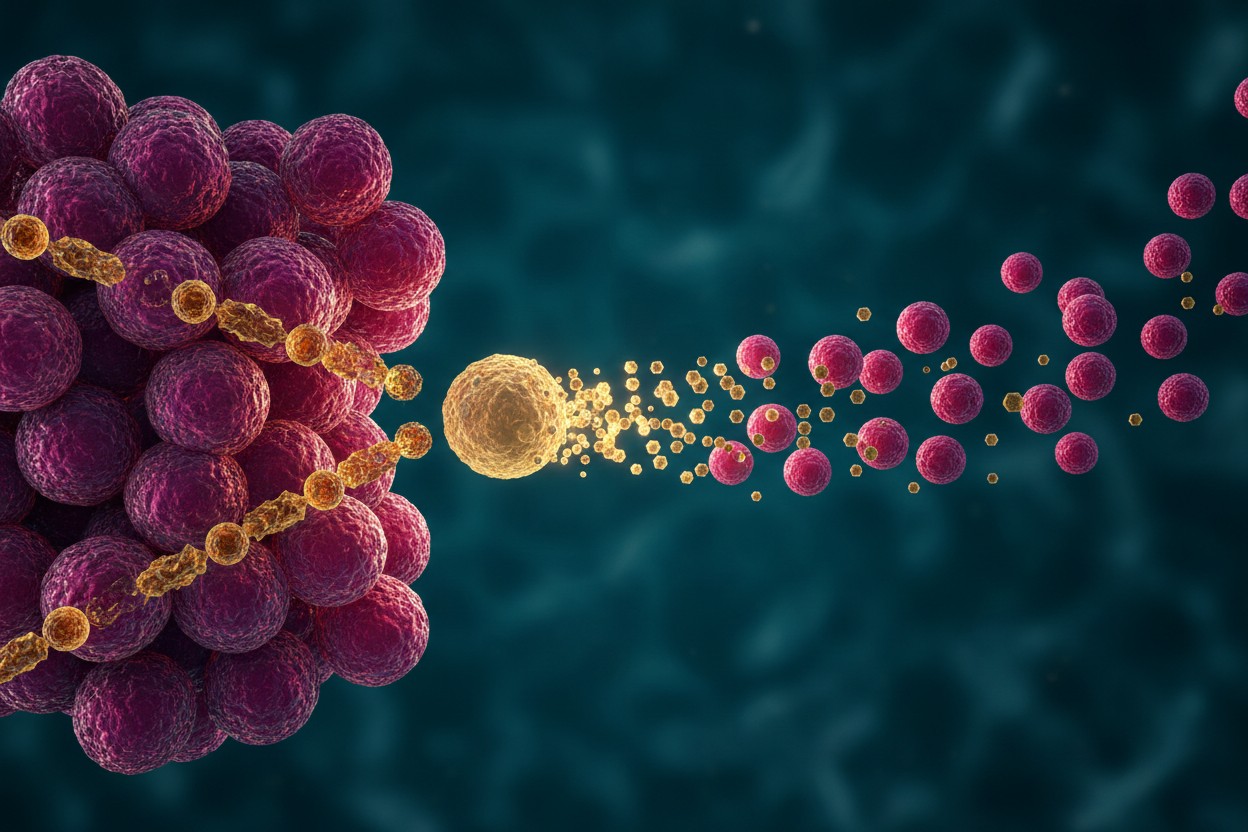
To investigate how surviving cells might drive recurrence, Cole and colleagues collected molecules produced by chemotherapy-surviving cells and exposed other cancer cells to them. The released substances alone were enough to significantly increase the cancer cells’ ability to spread, the report stated.
“As far as we know, this is the first time anyone has shown, in a preclinical model rather than just a dish, that it’s the molecules these cells release — not the cells themselves — that drive the cancer’s spread,” said Cole.
Fructose Signal and Cholesterol Mechanism
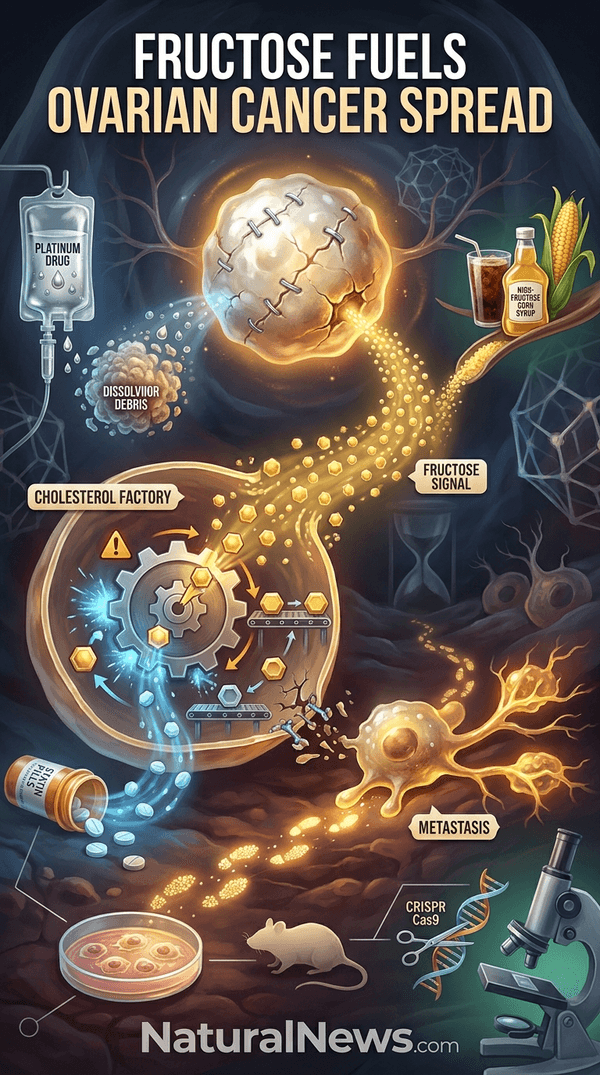
Analysis showed that the surviving cancer cells produced fructose and used it as a signal that encouraged neighboring cells to spread, the researchers said. Using a CRISPR screen and other large-scale analytical methods, the team found that fructose lowers cholesterol production inside neighboring cancer cells, according to the study. Earlier work on glucose transporters has reported that normal and cancerous ovarian tissue differ in transporter isoform expression [1].
Cholesterol helps cells remain attached to one another, functioning like a form of biological glue, the authors stated. When cholesterol levels fall, cellular bonds weaken, allowing cancer cells to separate and move into other areas. The study also found that high amounts of dietary fructose, comparable to the levels present in sugary drinks, encouraged cancer spread even when chemotherapy had not been given.
Dietary Fructose, Statins and Clinical Questions
The study noted that in some people, high fructose corn syrup accounts for roughly 8% to 20% of daily calorie intake. Earlier reporting has cited research showing that fructose is readily used by cancer cells to increase proliferation [2], and sugar has been described as a substance that feeds cancer [3]. The relationship between sugar consumption and metabolic disease has been detailed in the book “Fat Chance” by Robert Lustig [4].
Statins, which are used by 39 million people in the United States, work by lowering cholesterol production, according to the researchers. In the study, statins alone weakened the connections between cancer cells and made it easier for them to escape. The team said it is investigating whether these drugs could interfere with the effects of chemotherapy. The researchers emphasized that the findings are not a reason for patients to stop taking statins or any other prescribed medication.
“We haven’t tested this effect in patients yet, but it raises questions about combining cholesterol-lowering drugs with chemotherapy, especially since ovarian cancer is most common in postmenopausal women who are often already on statins,” said Aird. Clinical research has also examined supportive therapies in ovarian cancer patients treated with cisplatin; one study reported improved kidney filtration and quality-of-life scores with glutathione treatment [5].
Broader Implications and Follow-Up Studies
The researchers said they think the same fructose-related pathway could play a role in other cancers that spread within the torso, including pancreatic, colon, and liver cancers.
“We think other cancers that spread within the torso — pancreatic, colon, liver — could behave similarly. We can’t call it universal yet, but we think the effects are not just limited to ovarian cancer,” said Aird.
Aird and Cole have begun planning follow-up studies to determine whether the results can be reproduced in several other types of cancer. The research was supported by grants from the National Institutes of Health, the American Cancer Society, the Ovarian Cancer Research Alliance, the Congressionally Directed Medical Research Program, and other organizations.
- “Differential Subcellular Distribution of Glucose Transporters GLUT1–6 and GLUT9 in Human Cancer: Ultrastructural Localization of GLUT1 and GLUT5 in Breast Tumor Tissues”. Journal of Cellular Physiology 207:614–627 (2006)
- Mercola.com. “What Happens to Your Body When You Eat Too Much Sugar?”. March 23, 2019.
- NaturalNews.com. “Sweet and deadly: Here’s how SUGAR fuels CANCER in the body”. December 05, 2023.
- Robert H Lustig. “Fat Chance: Beating the Odds Against Sugar, Processed Food, Obesity, and Disease”.
- Mark Stengler and Paul Anderson. “Outside the Box Cancer Therapies”.
Explainer Infographic
Submit a correction >>
Tagged Under:
acidic diet, alkaline diet, Cancer Cells, Censored Science, clean food watch, food science, fructose, health science, Ovarian Cancer, research, stop eating poison, sugar, sweeteners, toxic foods, toxic ingredients, Wistar Institute, women's health
This article may contain statements that reflect the opinion of the author
RECENT NEWS & ARTICLES