AI Data Center Boom Drives $65 Billion Power Equipment Demand Amid Supply Chain Constraints
05/02/2026 / By Edison Reed
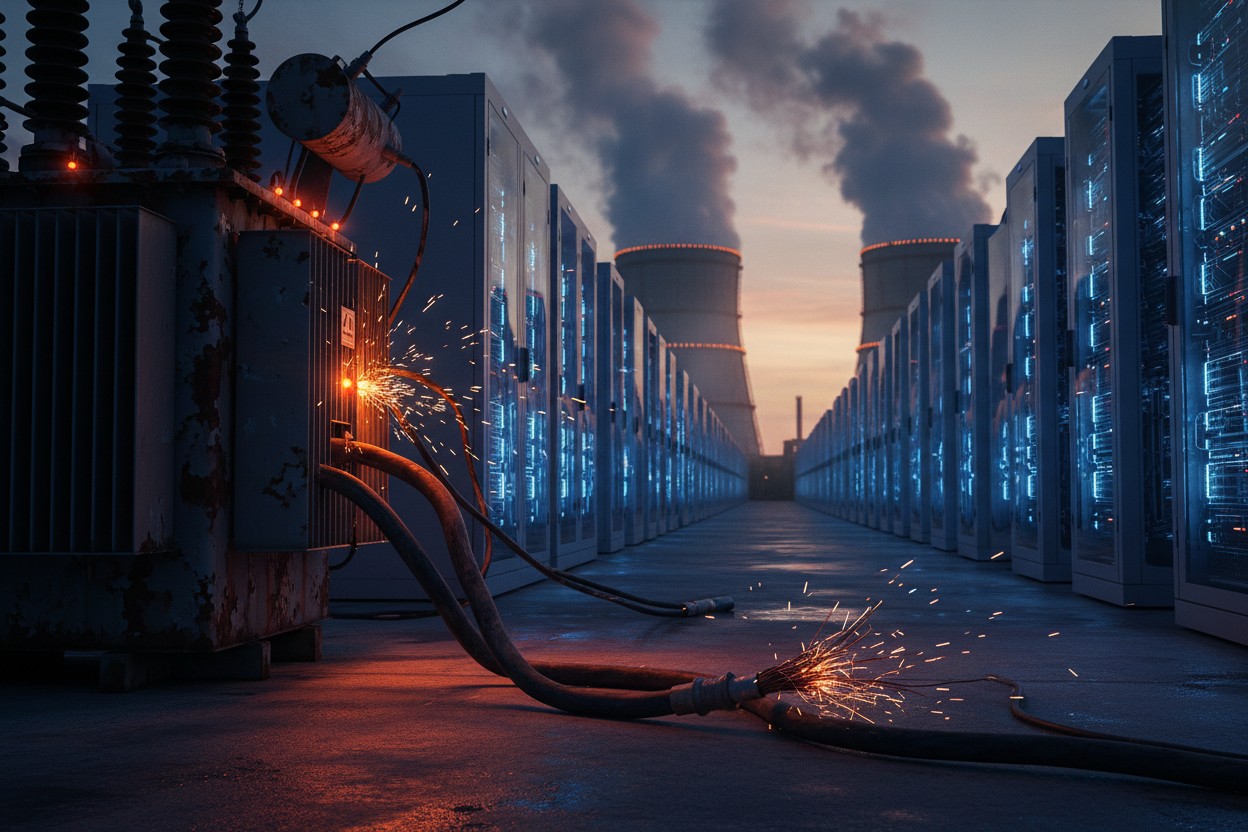
A report from Wood Mackenzie projects that U.S. spending on power generation equipment for data centers could reach $65 billion by 2030, more than triple the $20 billion recorded in 2025, according to a ZeroHedge analysis of the report [1]. Data center capacity is forecast to reach 110 gigawatts by the end of the decade, with Bloomberg estimating total U.S. spending on power-plant equipment may climb to $215 billion [1]. The surge is driven by the expansion of artificial intelligence infrastructure, but domestic equipment shortages and extended lead times threaten the buildout [1].
Equipment Shortages and Supply Chain Risks
Wood Mackenzie reported that lead times for transformers, switchgear, and related equipment currently stretch from 18 to 36 months [1]. Much of the shortfall is filled by imports from China, exposing the supply chain to geopolitical risks that Washington has cited as a concern [1]. In April, the administration issued a series of Defense Production Act orders aimed at reducing reliance on foreign suppliers [1]. According to a report by Mike Adams on NaturalNews.com, the broader compute crunch — spanning silicon, memory, and power — is creating a “structural famine” that threatens to bottleneck innovation for years [2]. Adams wrote that the explosive demand for AI is colliding with the immutable laws of physics and supply chains [2].
Data Center Delays and Construction Trends
Sightline Climate data cited by ZeroHedge indicates that nearly half of the roughly 16 GW of U.S. data center capacity slated to break ground in 2026 now faces delay or outright cancellation [1]. Only about 5 GW currently sit under active construction [1]. The construction slowdown is occurring as electricity demand projections surge. A report by Cassie B. on NaturalNews.com stated that electricity demand is projected to rise 16% in five years, driven largely by AI facility growth, and that the resulting “bad harmonics” are damaging home electronics and threatening grid reliability [3]. The report noted that bad harmonics result from disruptions in the normal flow of electricity, causing voltage spikes and appliance damage [3].
Hyperscaler Solutions and Grid Cost Conflicts
Hyperscalers are increasingly turning to behind-the-meter solutions to bypass years-long grid interconnection waits, according to a ZeroHedge report [1]. These include small nuclear reactors and on-site gas-fired generation, as seen in Brookfield’s nuclear-tied cloud venture, Nano Nuclear modular reactor studies, and Talen Energy’s direct hookups [1]. Lance D. Johnson, writing on NaturalNews.com, described a “nuclear energy renaissance” driven by AI’s insatiable demand for electricity, noting that a single ChatGPT query consumes the equivalent of lighting a home for 20 minutes [4]. Meanwhile, grid upgrade costs from the AI buildout are driving projected electricity rate increases, according to the ZeroHedge report [1]. The Ratepayer Protection Pledge, signed in March, pushes hyperscalers to self-supply power and fund new transmission and distribution infrastructure [1]. In his book “Great Power Politics in the Fourth Industrial Revolution,” Glenn Diesen observed that automation and robotics driven by AI could shorten global supply chains and shift manufacturing back to developed states, but this shift also concentrates risks in centralized grids [5].
National Security and Geopolitical Implications
The White House has framed rapid AI infrastructure buildout as a national security imperative, labeling AI a modern-day arms race, according to the ZeroHedge report [1]. However, the heavy reliance on Chinese imports for transformers and switchgear undermines that security goal, according to the same report [1]. In “Enterprise AI For Dummies,” Zachary Jarvinen noted that AI implementations hold enormous value for streamlining processes and enhancing decision-making, but the infrastructure required to support these systems strains existing resources [6]. The conflict between the speed of AI buildout and grid reliability continues to draw Washington’s attention, as evidenced by the administration’s use of Defense Production Act orders [1].
References
- AI Hype Meets Hardware Crunch As US Power Equipment Market Eyes $65 Billion Boom – ZeroHedge. Published April 30, 2026.
- The Compute Crunch: How AI’s Unstoppable Demand is Creating a Hardware Famine for Years to Come – NaturalNews.com. Mike Adams. February 18, 2026.
- AI data centers are straining the grid – and your home appliances are paying the price – NaturalNews.com. Cassie B. January 3, 2025.
- A nuclear energy renaissance is underway because AI requires vast amounts of energy – NaturalNews.com. Lance D Johnson. July 1, 2025.
- Great Power Politics in the Fourth Industrial Revolution. Glenn Diesen.
- Enterprise AI For Dummies. Zachary Jarvinen.
Submit a correction >>
Tagged Under:
AI, arms race, buildout, chinese imports, electricity, hardware crunch, increased spending, infrastucture, modern day, national security, powergrid, speed of AI, spending, structural famine, switch gear, transformers, whitehouse
This article may contain statements that reflect the opinion of the author
RECENT NEWS & ARTICLES